Master the Art of Grading
Understanding grading standards is essential for every collector. Use this guide to evaluate your comics and cards with confidence.
The Grading Scale
Comics use the CGC 0.5–10 numeric scale here. CGC says its standard was derived from Overstreet criteria, but Overstreet is a reference guide—not a certification or encapsulation service—and individual grading outcomes can vary.
Theoretically perfect. No flaws whatsoever. Extremely rare.
Nearly indistinguishable from a 10.0. Only the most minute, nearly imperceptible manufacturing defect allowed.
Nearly perfect. Allows for negligible handling or manufacturing defects. A spine stress line must be invisible to the naked eye.
Very well preserved. May have several minor manufacturing or handling defects. Example: A tiny corner crease or a couple of very small spine stress lines.
Excellent condition. Minor wear and small manufacturing/handling defects allowed. Slight stress lines or very minor corner blunting.
Still very sharp. Allows for some very minor wear. A few stress lines, slightly more corner blunting than 9.4.
Clean and flat. A few minor handling/manufacturing defects. Slight fold or crease, but nothing major.
Fits between VF and VF/NM. Attractive but with a few more defects than a 9.0.
An attractive collectible with a moderate defect or an accumulation of small defects. Minor cover wear, creases, or dimples.
Above average. Moderate wear is becoming more apparent. Flatness may be slightly compromised.
Above average. A major defect or accumulation of small defects. Spine roll, corner wear, or slight staining defined.
Above average with slightly more wear than a 6.0. Minor spine roll, a few creases, light soiling.
A copy with a major defect and several minor ones. Noticeable wear but still pleasing. Minor spine roll, corner creases.
Slightly above average, with additional wear. Creases, minor tears, and spine roll are more apparent.
Average, showing significant wear but still complete. Browning or soiling visible; small tears possible.
Average with an accumulation of wear. Creasing, corner rounding, and a slightly rolled spine.
The average used comic. Significant wear, creases, fading, or discoloration. Book is complete and readable.
Below average, with substantial wear. Heavier creasing, cover fading, and possible small pieces missing.
Below average, heavy wear but structurally intact. Spine roll, staining, and creases throughout.
Shows heavy wear but still complete. Multiple defects: creasing, soiling, small tears, and rounding.
Heavily read. Major defects like tears, creases, stains, and detachment. Still complete.
Substantial wear with potential minor damage. A small piece may be missing; a soiled, well-read copy.
Heavily worn, with possible soiling, staining, or small tears. May be missing a small piece.
Heavily worn and damaged but complete and readable. Soiling, tears, and a rolled spine are common.
Heavily damaged and may be incomplete — missing pieces, brittleness, or heavy soiling. The lowest collectible grade.
How the Experimental Estimate Works
This learning estimate uses the CGC numeric scale with Overstreet-informed defect heuristics; it is not a CGC grade. Comics get one holistic grade, but the logic is the same: your most limiting defect sets the ceiling, and small flaws compound. The worst cover/structural defect and accumulated spine/edge wear cap the grade — the lowest one wins.
Color-breaking is the cliff
The same crease grades ~2 full points lower if it breaks color (shows white underneath). Always ask: does it show white? Non-color-breaking caps ~9.0; color-breaking caps ~7.0 or lower.
Page quality can set a ceiling
CGC reports page quality separately, but some page states also limit the numeric grade. The experimental checklist maps its simpler choices to the nearest published CGC state: OW/W → 9.9 · OW → 9.8 · tan → 7.5 · slightly brittle → 6.5 · brittle → 3.5.
Era context is not an age bonus
Golden and Silver Age books do not automatically gain points. A professional may contextualize era-specific manufacturing traits, while handling wear, creases, tears, brittleness, and structural damage keep the same ceilings used for Modern books.
Structural defects are floors
Any tear, missing piece, spine split, or detached cover drops you below 6.0 regardless of how sharp the cover looks.
Count your spine tics — and check color
1–3 light tics → still 9.4+. Several → 8.0s. Many or color-breaking → 7.0 and below.
The arm's-length test
9.x = looks new, you hunt for flaws. 8.0 VF = looks good at arm's length. 7.0 = wear is immediately obvious. 6.0 = clearly handled.
Restoration is a separate track
Color touch, tear seals, trimming, or piece replacement put a book on CGC's Purple (Restored) label — graded apart from the blue-label number, not just a deduction.
Common Defects
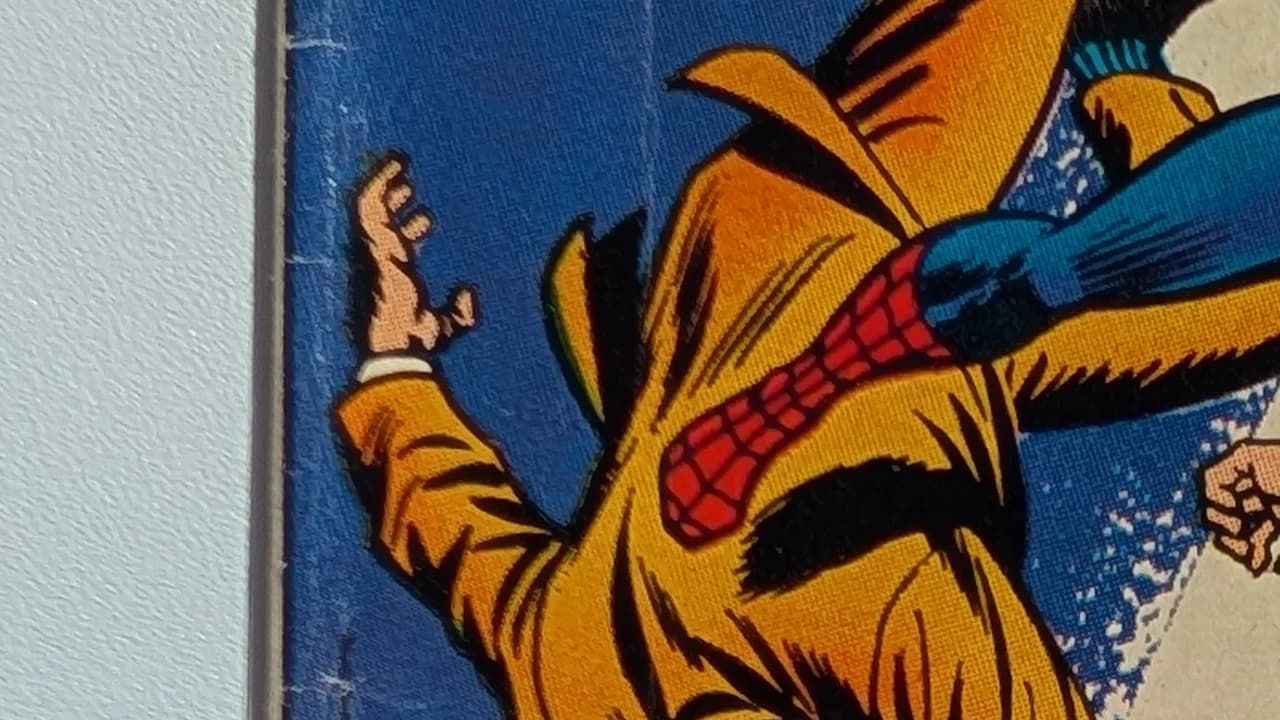
Spine Tics
Small, hairline creases on the spine, often near staples. 'Color-breaking' tics (showing white paper) are more severe than non-color-breaking ones.
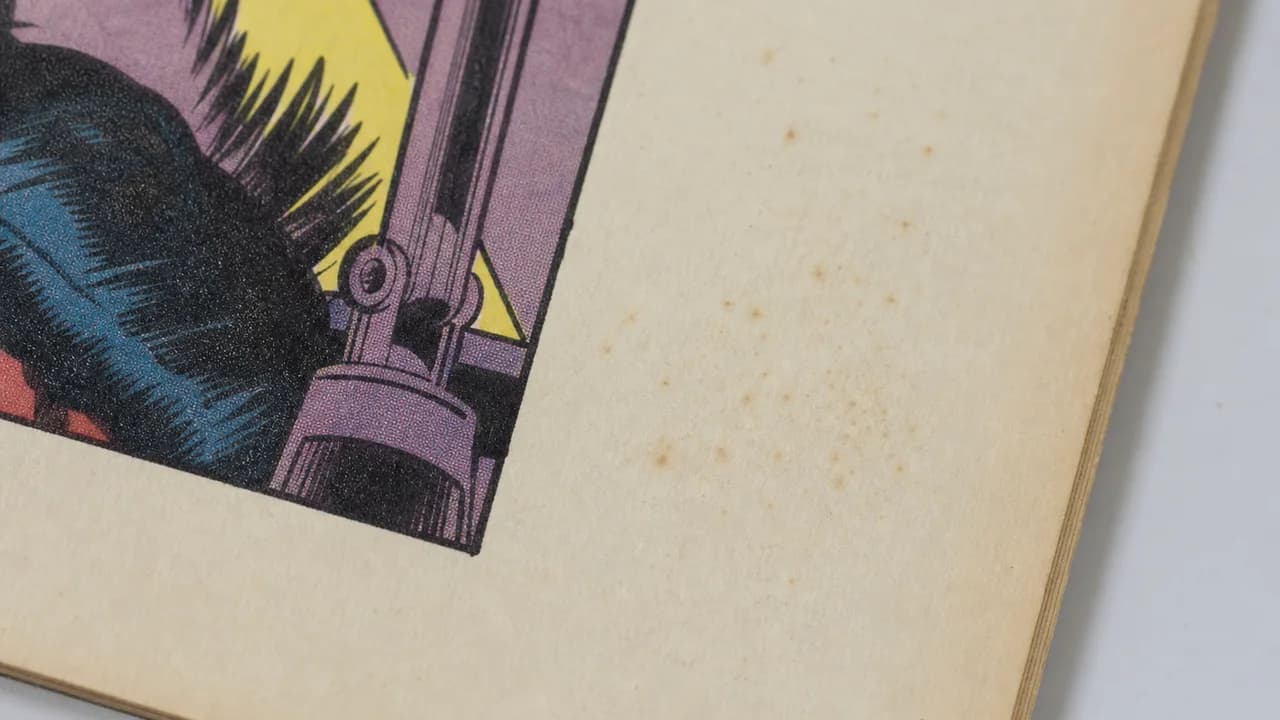
Foxing
Brownish-red or yellowish spots on the paper caused by mold or oxidation. Common on older books.
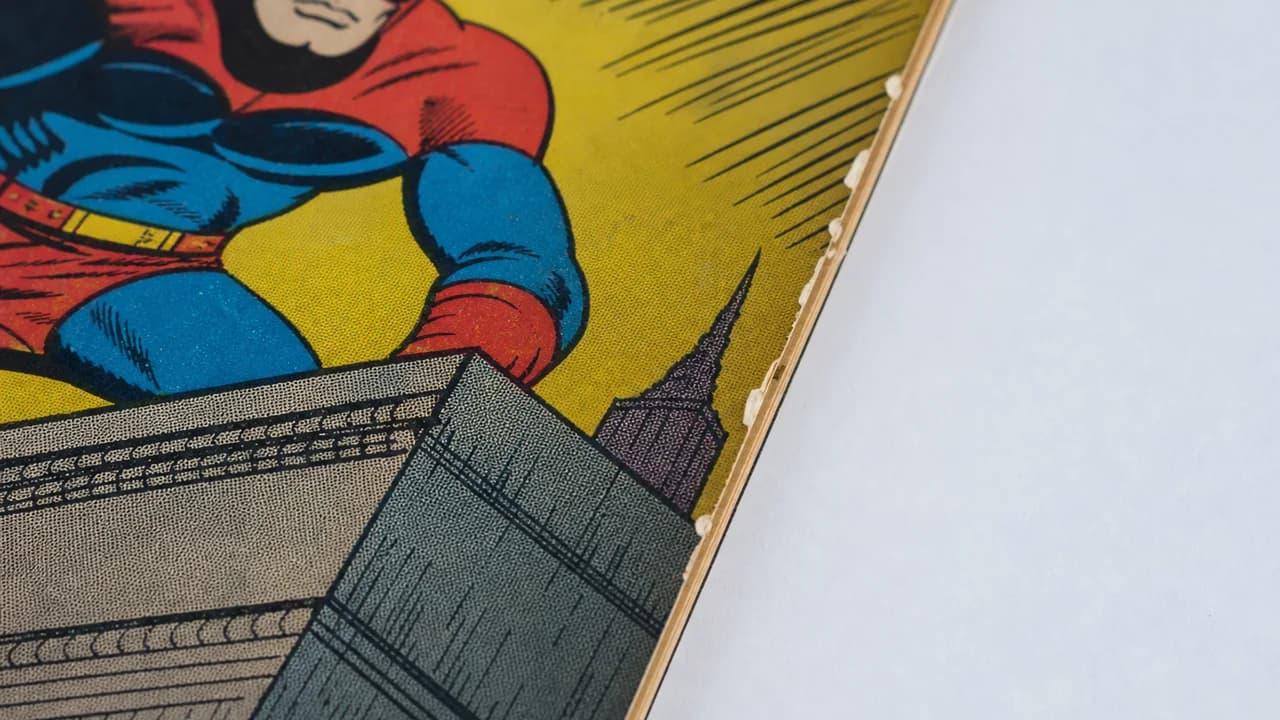
Marvel Chipping
A specific printing defect from the late 50s/early 60s where a dull blade caused tears/chips along the right edge.
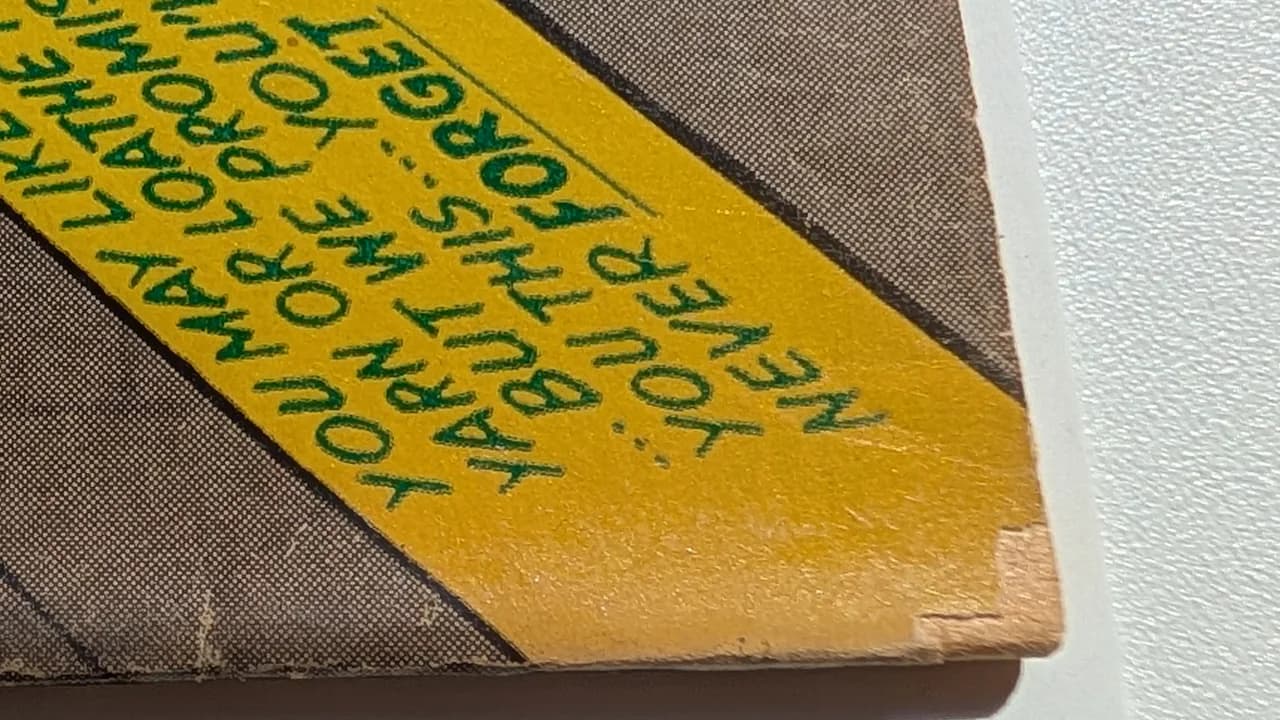
Corner Blunting
When the sharp corner of a comic is impacted, rounding it off or creating a soft impact crease.
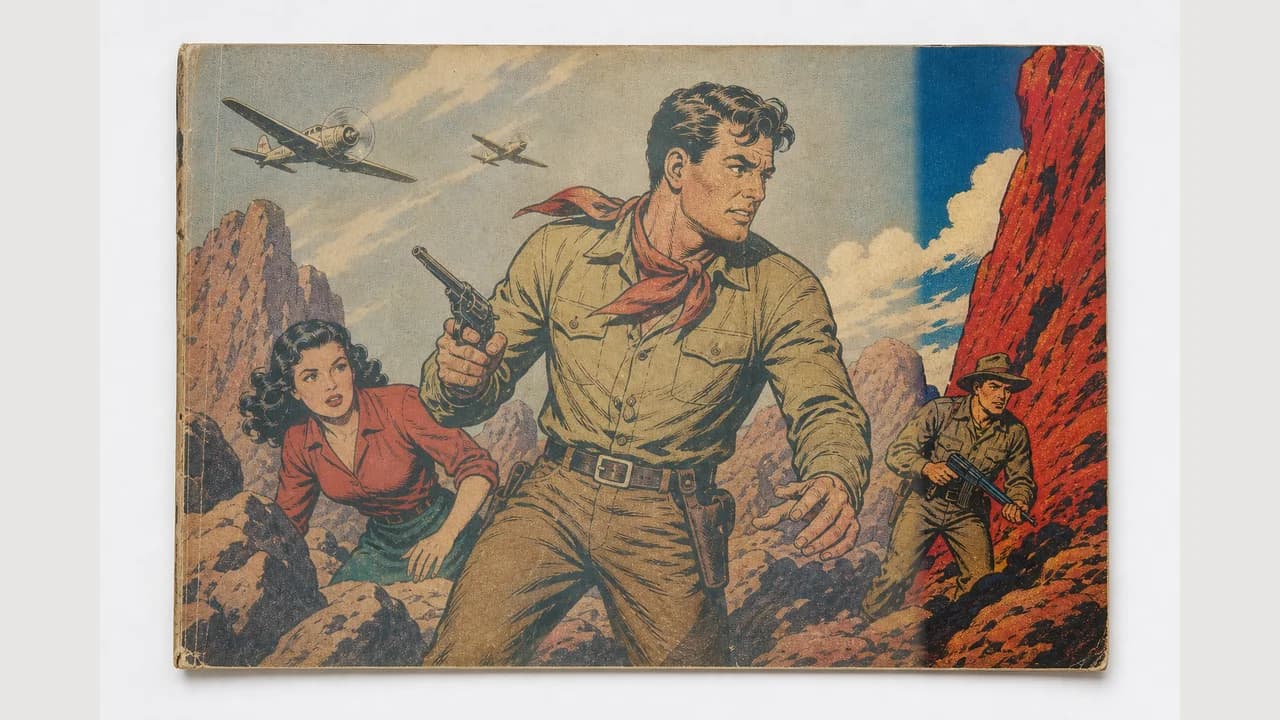
Sun Shadow / Fading
Loss of color intensity due to exposure to light. Often uneven.
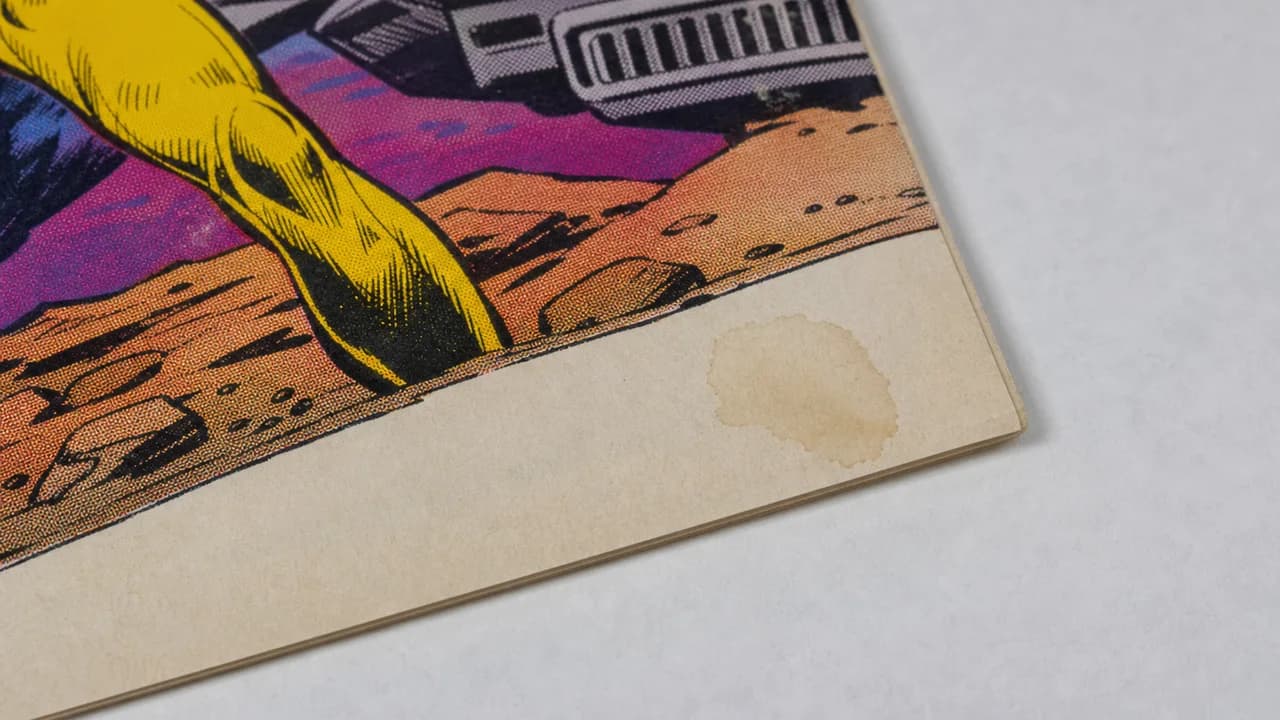
Staining
Discoloration from foreign substances (water, oil, coffee, etc.).
Spine Roll
A curvature of the spine that prevents the front and back covers from aligning. Caused by rolling or improper storage.
Staple Tears
Tears radiating from a staple, caused by stress or careless page-turning.
Rusty Staples
Oxidation on the staples. Rust can migrate into the paper, leaving stains around the staple.
Centerfold Detachment
The center pages have separated from the staples, either partially or completely.
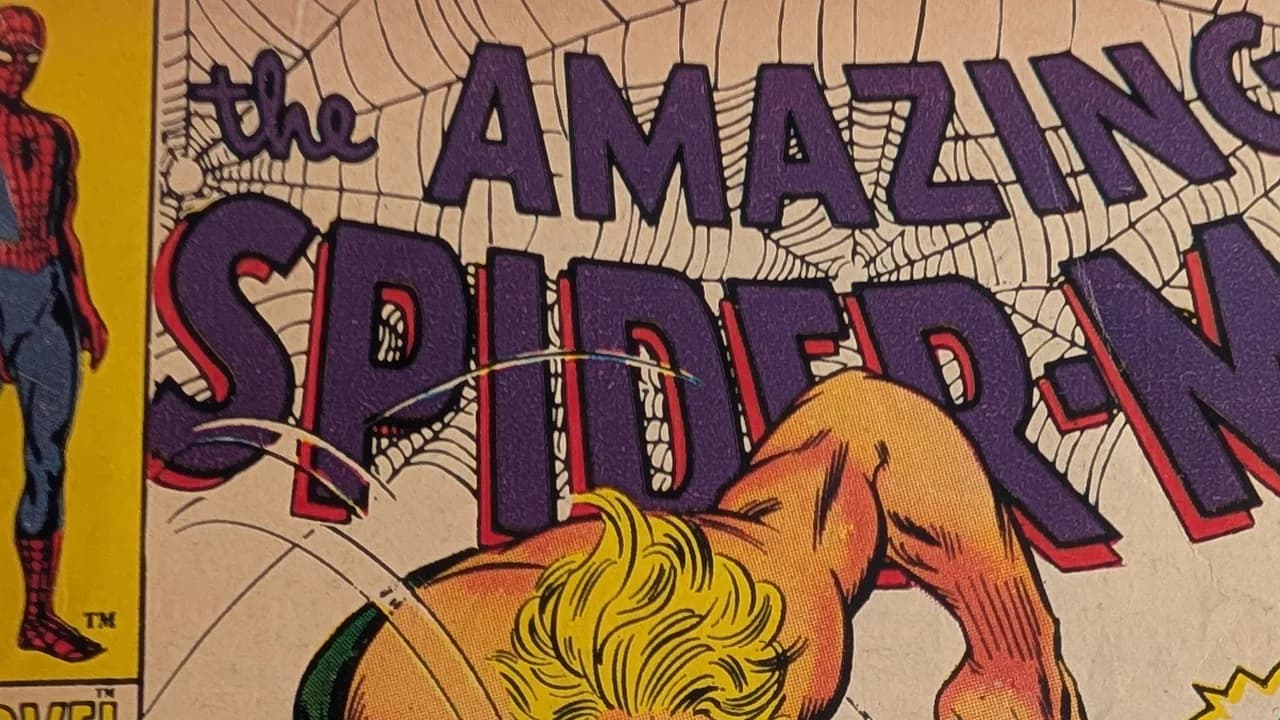
Creases & Folds
Bends in the cover or pages. Color-breaking creases fracture the ink and show white underneath; non-color-breaking creases do not.
Tears
Rips in the cover or pages, from small edge tears to large pieces nearly detached.
Missing Pieces
Areas of the cover or pages that are gone entirely — from chipping, tears, or clipped coupons.
Water Damage
Rippling, warping, and staining from moisture. Often leaves visible tide lines.
Restoration
Non-original material or processes added to improve appearance: color touch, tear seals, piece replacement, or trimming.
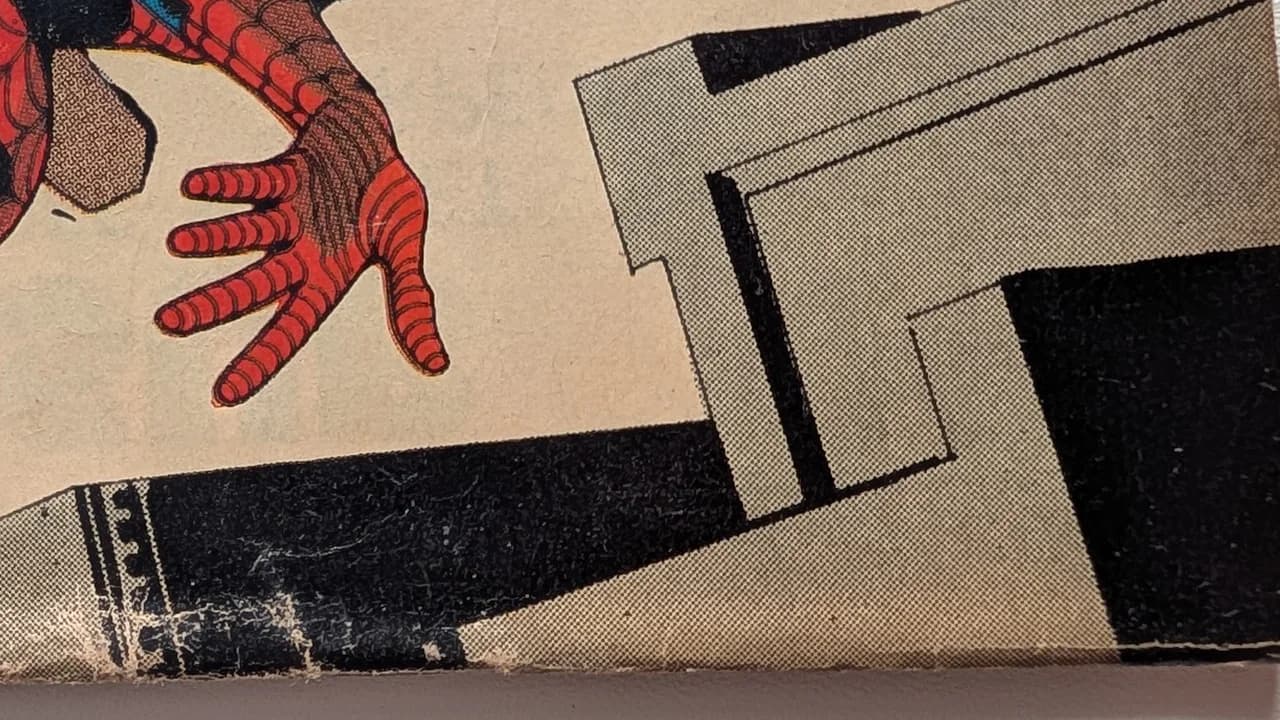
Edge Wear
Fraying, soft creasing, and abrasion along the outer edges of the cover from handling and shelf wear.
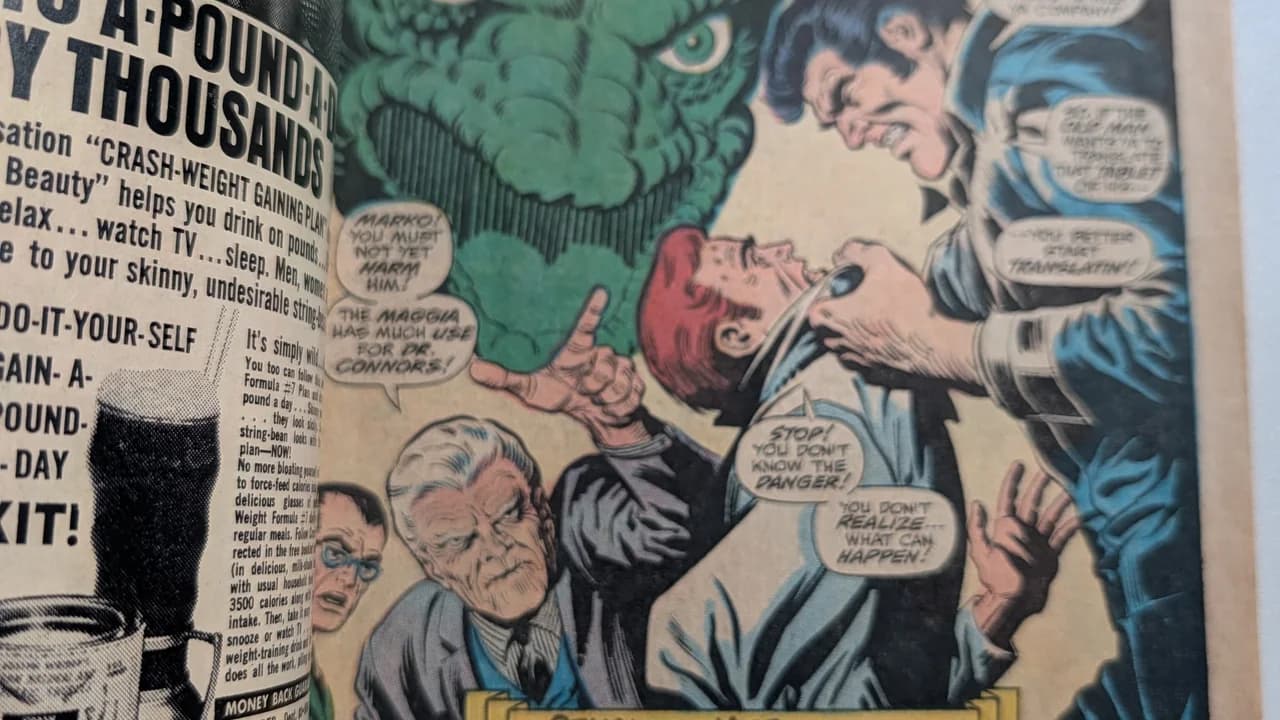
Page Browning / Tanning
Age discoloration of interior pages, progressing from off-white toward cream, tan, and eventually brittle.